PRODUCT GUIDE
Tortoise Pellets: Are They Any Good?
An evidence-based look at tortoise pellets: declared fibre and protein compared, how to read the label, which species each formula suits, and where specialists disagree.
Evidence-led guidance · UK focus · Veterinary reviewed
At a glance
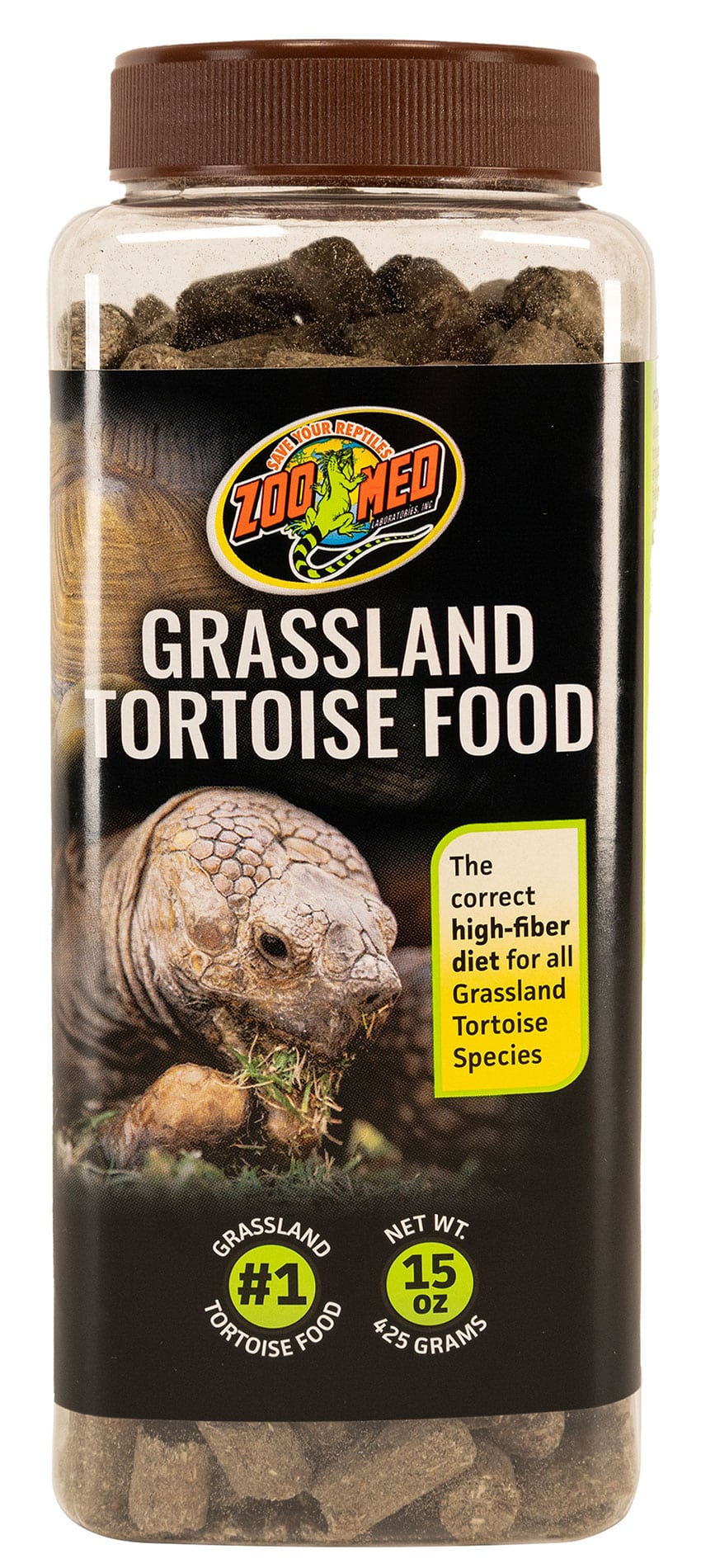
Zoo Med Natural Grassland
Fibre 26% maximum · Protein 9% minimum
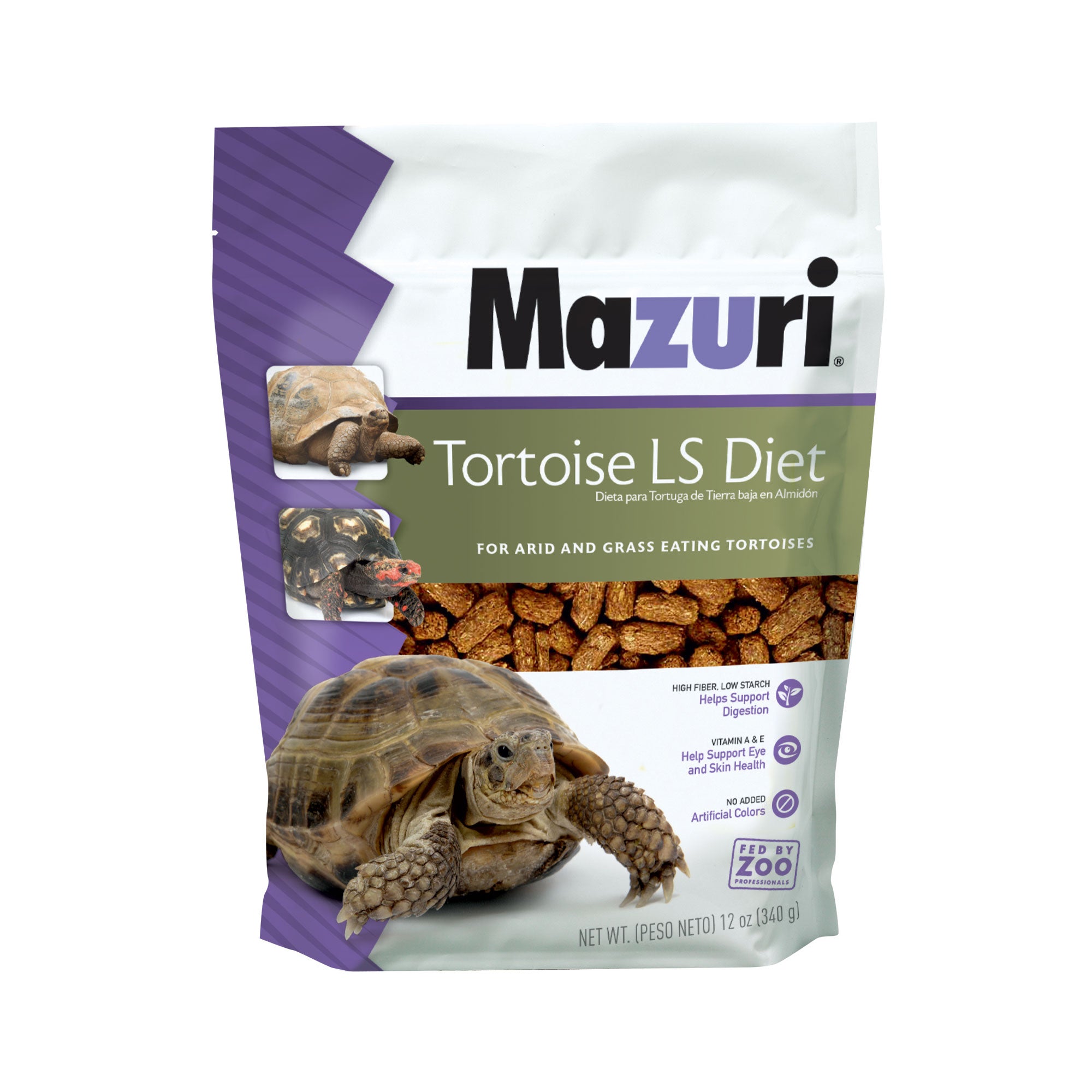
Mazuri Tortoise LS
Fibre 18–22% · Protein 12% minimum
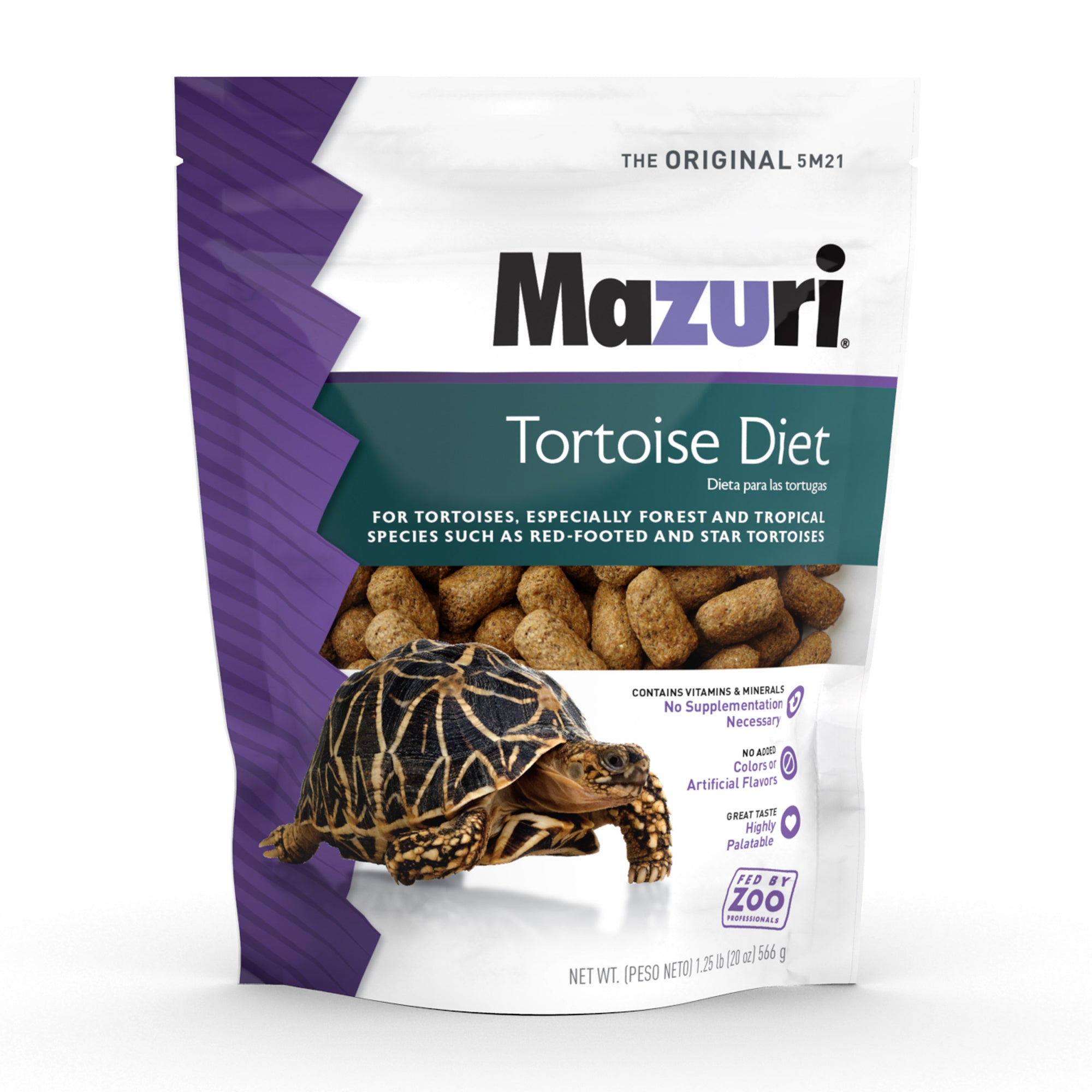
Mazuri Tortoise Diet (original)
Fibre 18% maximum · Protein 15% minimum
Pellets are the most disputed category in tortoise feeding, and the disagreement is real rather than a matter of brand preference.
| Position | View |
|---|---|
| Manufacturers | A complete pelleted diet can form the bulk of daily intake |
| Veterinary guidance | Commercial diets should not be used exclusively, but may form part of the intake |
| Tortoise Trust | Avoid mass-market pellets. Too energy-dense, too processed, too far from a natural diet |
We are not going to pretend that is settled. What we can do is show you the actual numbers on the bags, which is what most pellet articles never bother with.
What pellets are
Extruded or compressed dry food, usually built on a base of hay or hulls with grains, plant meals, vitamins and minerals added. Some include added probiotics.
The important thing about the format is not the ingredients but the processing. Milling plant material into a fine particle and re-forming it changes how it behaves in a tortoise gut, regardless of what went into it.
The fibre problem
Tortoises ferment food slowly in a large hindgut, and how fast that fermentation runs depends on fibre content and particle size. Coarse, long fibre releases energy slowly. Fine particles release it quickly, which drives faster growth than is healthy.
Research cited by the Tortoise Trust suggests crude fibre needs to be in the region of 30 to 40% on a dry matter basis to keep digestibility appropriately low.
Now compare that against what UK-available products actually declare:
| Product | Crude fibre (declared) | Crude protein | First ingredients |
|---|---|---|---|
| Zoo Med Natural Grassland | 26% max | 9% min | Suncured oat hay, suncured timothy hay, soybean hulls, wheat middlings, alfalfa meal |
| Mazuri Tortoise LS | Not less than 18%, not more than 22% | 12% min | Timothy grass hay first, dietary starch capped at 7% |
| Mazuri Tortoise Diet (original) | 18% max | 15% min | Ground soybean hulls, ground corn, dehulled soybean meal, ground oats, wheat middlings, cane molasses |
Figures are as declared by the manufacturers at the time of writing. Formulations change, so check the current bag.
Every one of them falls short of the 30 to 40% target, and the gap is not marginal. That is the substance of the Trust’s objection, and it is visible on the packaging rather than a matter of opinion.
How to read the label
Four things, and the first two are the ones nobody checks.
1. Is the fibre figure a minimum, a maximum or a range?
This matters enormously. “Crude fibre not more than 18%” is a ceiling, and tells you nothing about what is actually in there. It could be 8%. “Not less than 18% and not more than 22%” is a range, which is genuinely informative.
Of the products above, Mazuri LS declares a range. The original Mazuri diet declares a maximum only. Same manufacturer, very different levels of disclosure.
2. What are the first five ingredients?
Ingredients are listed by weight, so the first few are the product. A hay-first product is a different proposition from a corn-and-soybean-first one.
Zoo Med Grassland leads with oat hay and timothy hay. Mazuri LS leads with timothy grass hay. The original Mazuri diet leads with soybean hulls and ground corn, with cane molasses sixth.
3. Protein.
Lower is better for herbivorous species. The spread above runs from 9% to 15%, which is a substantial difference for an animal where excess protein drives shell deformity and renal strain.
4. Starch and sugar.
A declared starch cap is a good sign. Cane molasses high in an ingredient list is not.
Species suitability
Formulas are not interchangeable, and this is the most common purchasing mistake.
| Species group | Look for | Avoid |
|---|---|---|
| Mediterranean Testudo | Grassland or low-starch arid formulas, if using pellets at all | Tropical and omnivore formulas, higher protein |
| Sulcata, leopard, Indian star | Grassland or low-starch formulas, hay-first | Anything grain-led |
| Red-footed, yellow-footed | Tropical or omnivore formulas | Arid formulas, which are wrong for the species |
A “tortoise food” that does not specify which tortoise is a warning sign in itself. The dietary requirements of a Sulcata and a red-foot have almost nothing in common.
When pellets can and cannot fit
Where a case exists:
- As a small part of intake for a grazing species, alongside constant hay
- Through a British winter, when forage is unavailable
- For a keeper with no garden and limited access to fresh weeds
- Where a vet has recommended them for a specific animal
Where the case is weak:
- As the bulk of daily intake. Mazuri’s LS feeding instructions suggest the diet should provide 80% or more of daily intake, which is precisely the practice the Tortoise Trust objects to and which sits outside mainstream veterinary advice too
- For a tortoise with access to good forage in summer
- For juveniles, where growth rate matters most and energy-dense food works against you
- As a substitute for identifying and growing weeds
Our position: if you use pellets, use them as a supplement rather than a staple, choose a hay-first grassland formula matched to your species, and keep fresh forage doing the heavy lifting. If you would rather not use them at all, nothing is lost. No tortoise needs pellets.
How to serve
- Follow the manufacturer’s feeding guidance for quantity, and treat 80%-of-intake instructions with scepticism given the disagreement above.
- Soaking is optional. Manufacturers note it is not necessary but may help a tortoise accept the food. If moistened, replace it at least twice daily, since damp pellets spoil.
- Do not grind them finer. The particle size is already the problem.
- Provide hay and browse alongside, which every manufacturer instruction also says.
- Fresh water always, which matters more with dry food.
The Pre-Alpin exception
One point of partial agreement is worth reporting. The Tortoise Trust, while recommending against mass-market pellets, regards the Pre-Alpin and Pro-Alpin Testudo range more favourably, on the grounds that it includes a broader spread of plant species and omits grain derivatives.
We have not tested these products and are reporting the Trust’s stated view rather than endorsing them. It is a useful data point precisely because it comes from the source most critical of the category.
Common questions
Do tortoises need pellets? No. A varied diet of weeds, flowers and appropriate greens meets requirements without them.
Are pellets bad for tortoises? Not inherently. The concerns are about energy density, particle size and how heavily they are used, not toxicity.
Which pellets have the most fibre? Of the products above, Zoo Med Natural Grassland declares the highest at 26% maximum. All fall short of the 30 to 40% target.
Can I feed pellets to a Hermann’s tortoise? If you use them, choose a grassland or low-starch formula rather than a tropical one, and keep them a small part of the diet. See Hermann’s tortoise diet.
Can I feed pellets to a Sulcata? Grassland formulas exist for exactly this species, but hay should still be the diet. See Sulcata tortoise diet.
Are pellets better than supermarket greens in winter? They are different weaknesses. Pellets are energy-dense and finely processed; salad is watery and low in fibre. Dried herbs and flowers beat both. See dried tortoise food and winter feeding.
Should I soak them? Optional, and useful for a tortoise refusing dry pellets. Replace them twice daily if you do.
For the alternatives, see fresh tortoise food, dried tortoise food and grow your own tortoise food. For a shortlist across formats, see best tortoise food in the UK.
Product figures are taken from manufacturer-published guaranteed analyses and ingredient lists. We do not test products and do not accept payment for coverage. Where we earn commission from a link it is disclosed in our affiliate disclosure. Sourcing standards are in our sources and review policy, and this is husbandry information rather than clinical advice. See our veterinary disclaimer.
Last reviewed: September 2026.