
HOMEPAGE
Tortoise Food UK: What to Feed, What to Avoid and How to Get It Right
What tortoise food is safe in the UK, species by species. Check any food in seconds, see what to avoid, and get evidence-led feeding, chart and product guides.
Evidence-led guidance · UK focus · Veterinary-science reviewed
105
Food records
3
Diet groups
6
Verdicts
TortoiseFood.co.uk Food Checker
Can My Tortoise Eat This?
Choose your tortoise, then search a food for a species-aware feeding verdict.
START WITH THE SPECIES
Mediterranean
Hermann’s · Horsfield’s
70%+ weeds
Leaves and edible flowers
Grazing
Sulcata · Leopard
70–75% grass & hay
Coarse grazing fibre
Forest
Red-footed · Yellow-footed
Leaves · flowers · fruit
Different rules apply
SPECIES FIRST
Diet guides by species
Advice shaped around Mediterranean, grazing and forest tortoises.
PRACTICAL
Safe food directory
Browse plants and foods by verdict, category and UK availability.
EVIDENCE-LED
Sources made visible
Clear reasoning, limitations and specialist-source context.
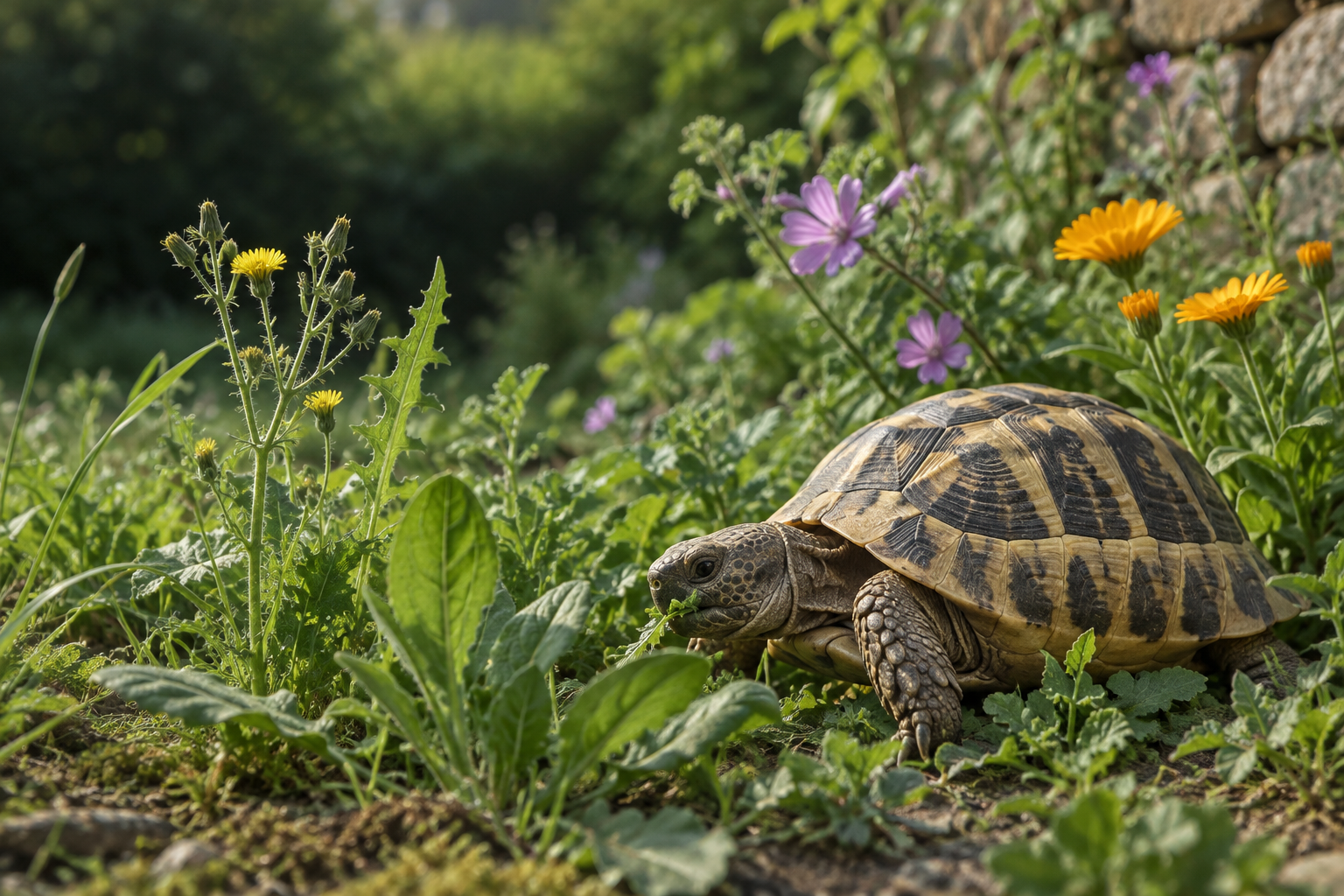
Weeds, leaves and flowers. That is what nearly every pet tortoise in Britain should be eating, in a diet high in fibre and calcium and low in protein, sugar and easily digested starch. The Royal Veterinary College’s exotics service is specific about it for the Mediterranean species most people here keep: weeds should make up more than 70% of the diet, with vegetables and salad filling the gap only when weeds are hard to come by.
Species comes first, though. A Sulcata wants grass and hay. A Hermann’s wants weeds and flowers. Red-footed tortoises are the one commonly kept group that eats fruit as a matter of course, and feeding them like a Testudo is its own kind of mistake.
Checking one specific food? The tortoise food checker covers plants, vegetables and shop-bought items, and gives you a verdict for your species group along with the reasoning and the sources behind it.
Start with your species, not a shopping list
Bad diets usually begin with advice written about “tortoises” in general. There is no such animal. Testudines covers hundreds of species, and the ones kept in Britain come from three very different habitats. Choosing food for tortoises as though they were one animal is how most avoidable damage starts, because their digestive systems are not interchangeable.
| Diet group | Common UK species | What most of the diet should be | Fruit |
|---|---|---|---|
| Mediterranean (Testudo) | Hermann’s, Horsfield’s/Russian, spur-thighed (Greek), marginated | Mixed weeds, leaves and edible flowers | Not a normal food; occasional at most |
| Grazing / savannah | Sulcata, leopard | Grasses and meadow hays, plus weeds and flowers | Not a normal food |
| Tropical forest | Red-footed, yellow-footed | Leaves, flowers and fruit, with a little animal protein | A genuine part of the natural diet |
The Tortoise Trust puts mixed grasses and meadow hays at roughly 70 to 75% of the total diet for leopard and African spurred tortoises. Testudo species sit at the other end of that scale entirely, being poorly equipped to digest the high silica content of grass fodder. Same word, “tortoise”. Two incompatible diets.
Once you know which group yours belongs to, read the guide written for it: Hermann’s, Horsfield’s, sold in UK shops as Russian or “Horsefield”, Sulcata, leopard, or red-footed. Unsure what you have? The species diet overview explains how to tell the common ones apart.
What tortoises actually eat
Wild tortoises browse rather than graze at a bowl. Field observation suggests many species take small quantities from something like 200 different plants across a single year, which is the reason no one plant should dominate for weeks on end, however good it looks on a list of safe foods.
Translated into a British garden, that means rotation. Dandelion, plantain, sow thistle, clover, chickweed, vetch, mallow, bramble leaves, plus edible flowers whenever they are in season. Our guide to the best weeds for tortoises deals with identification and safe picking spots. If you have only just brought one home and want the beginner version of what to feed a tortoise in the UK, start there.
Supermarket produce is a stopgap. Salad leaves are mostly water with very little fibre in them, which is why they so reliably produce loose, wet droppings. Leafy greens with some substance to them, such as watercress, rocket, radicchio and lamb’s lettuce, are the better shop-bought fallback. They still have their place in a British winter, and the vegetables guide sorts the ones worth buying from the ones best left on the shelf.
Safe foods, and the six answers we use
“Is this safe?” is rarely a yes or no question, so the checker does not pretend otherwise. Each food carries one of these verdicts, given separately for each diet group:
- Suitable regularly. Useful within a varied, species-appropriate diet.
- Feed in moderation. Fine in rotation, but it should not dominate.
- Feed sparingly. Small, occasional amounts.
- Do not feed. Avoid deliberately.
- Species dependent. The answer changes materially between diet groups.
- Insufficient evidence. Not enough reliable information to give you a confident answer.
Dandelion shows why the middle categories matter. It is a genuinely valuable forage plant, yet it sits at feed in moderation rather than suitable regularly, because it acts as a diuretic and carries oxalates. Kale is another. Its calcium to phosphorus ratio is good and its iodine content offsets some of the goitrogens it contains, making it one of the better brassicas to reach for, but that still makes it a rotation food rather than a daily one.
Browse the whole tortoise safe food directory, or print the tortoise food chart and stick it on the fridge.
Foods to avoid
A handful of items are worth committing to memory, because the harm they do cannot be undone.
Dog food, cat food, meat and mealworms head the list. Animal protein fed to a herbivorous tortoise drives excessive growth, severe shell deformity, liver disease and renal stress. Peas, beans and pulses cause similar problems through protein and phytic acid, which is why they belong nowhere near the bowl despite being vegetables.
Root vegetables are too readily digestible, poor in calcium and high in phosphorus. Bread and other processed human food have no business being offered at all. Then there are the garden plants that are outright toxic: buttercup, rhubarb, avocado and daffodil among them.
None of this shows up overnight. That is what makes it dangerous. An adult tortoise can carry on for years on a diet that is quietly wrecking its liver and kidneys, while a growing juvenile can suffer permanent damage in a few weeks. Anyone who tells you they have fed something questionable “for years with no ill effect” is almost always talking about an adult. The full list, with reasoning for each entry, is in tortoise foods to avoid.
Fresh food, dried food and pellets
Commercial tortoise food is where UK advice genuinely splits, and it is worth knowing that before you spend anything.
Fresh food is the least contested option. Foraged or home-grown weeds and flowers come closest to a natural diet, and a delivered fresh tortoise food mix does much the same job when you have no garden. If you do have one, or even a few decent pots, growing your own tortoise food works out cheaper than buying it and settles any question about pesticides.
Dried herbs, flowers and grasses earn their keep in winter, when British forage vanishes. Look for minimal processing that preserves coarse, long fibres, which is the quality specialists point to. The label detail is covered in dried tortoise food.
Pellets are the argument. Manufacturers present complete pelleted diets as the bulk of what a tortoise should eat. The Tortoise Trust flatly disagrees, recommending that keepers avoid mass-market pelleted products on the grounds that they are extremely high in digestible energy and in no way approximate a natural diet. We would rather show you both positions than pretend there is a settled answer, and our guide to tortoise pellets does that.
Most tortoise feed in this country is bought online rather than in pet shops, and the specialist growers tend to beat the chains on quality. For a shortlist across every format, start at the best tortoise food in the UK, or compare the brands sold here.
One rule holds whatever you buy. It supplements graze. It does not replace it.
Feeding through a British year
Britain has wet summers and cold, damp winters, which places it outside the natural range of every species discussed here. The feeding year has to work around that.
Between spring and early autumn, weeds do most of the work. A securely fenced, planted outdoor run lets a tortoise forage and bask the way it would in the wild. Never use weed killer or slug pellets anywhere a tortoise can reach, and wash foraged plants properly before they go in the bowl. Garden centre and florist plants are a particular trap, since they arrive heavily treated with pesticides; grow them on for a while and harvest the new growth instead of feeding them straight from the shop.
Come November, forage disappears and most keepers fall back on bagged salads, brassicas and dried food. Fibre is what slips first, usually without anyone noticing, and supplementation matters more in these months than at any other time of year. Winter feeding for tortoises builds a workable cold-weather diet out of what British shops actually stock.
Hibernating tortoises stop eating well before they go under. The gut needs four to six weeks to empty completely. Timing is set out in feeding before hibernation.
How much, how often, and what else matters
Overfeeding is the far more common problem in captivity. In the wild, food is scarce and has to be walked for; in a tortoise table it arrives daily in quantities no wild animal would encounter.
British Chelonia Group guidance for hatchlings is a single feed each day, portioned so that it is cleared inside twenty minutes. Adults can be fed daily, or with one day a week skipped. Portioning and growth monitoring are covered in the feeding guide and in how often to feed a tortoise, while baby tortoise food handles hatchlings, where the margin for error is smallest.
Two things sit alongside food and are easy to get wrong.
Calcium is the first. Tortoises need a lot of it, plus vitamin D3 to make any use of it, and D3 is synthesised from UVB. Glass blocks UVB completely, so a sunny windowsill achieves nothing. See calcium and supplements.
Water is the second. The idea that tortoises rarely drink is simply wrong. Keep clean water available at all times and bathe them regularly, as explained in water and hydration.
A tortoise that stops eating outside the run-up to hibernation has a health problem rather than a food problem. The British Chelonia Group advises getting advice within a week.
Where our food advice comes from
This site does one thing: it covers what tortoises eat. Records and pages are built from specialist and veterinary sources rather than assembled from other people’s food lists. The main ones are the Tortoise Trust, the British Chelonia Group, The Tortoise Table plant database, and published veterinary guidance. Where they disagree, we say so rather than choosing whichever answer reads more neatly.
Our sources and review policy sets out how claims are checked and how often records get revisited. None of this replaces veterinary care, and our veterinary disclaimer explains where the line sits.
Last reviewed: September 12, 2026.